
College research papers can feel daunting, especially if you’re returning to school as a working adult. I know I struggled writing my first couple papers when I had just re-enrolled.
In this post you’ll learn my step-by-step system for outlining, organizing, researching, and writing an academic paper. This system has gotten me a B or above (mostly A’s). My priorities are to follow the instructions, stay organized, not cry, and create the most ethically efficient paper possible. Follow along if you need to write your research paper.
The Overview
- Have some general knowledge of the topic. This may come from a lecture, required readings, or textbook.
- Summarize the assignment and rubric instructions in the spot where you’re drafting your paper. This could be Google Docs, Notion, Obsidian (what I use), or whatever.
- Create a basic outline with headings based on instructions
- Intro
- Section covering Main point 1
- Section covering Main point 2
- Section Covering Main point 3
- …Section Covering Main point x
- Conclusion

Taking Your Stance
- Write your thesis statement. This is a sentence saying what the position of your paper is and what topics you’ll be covering to support your paper’s position. Here’s the template I use:
- [Topic] is [opinion] because of [main point 1], [main point 2], [main point 3].
- Example: “The Renaissance was important to Western civilization because of economic developments, scientific breakthroughs, and philosophical ideals.”
- Create topic sentences for each of your section main points that state that the main point is important to the topic. The topic sentence establishes what supporting evidence and commentary readers can expect in this section.
- Example: “The Renaissance was first important to Western Civilization because of economic developments.”
- Tip: Make sure that your main points are organized in the paper in the same order they’re organized in your thesis statement.
Supporting Your Stance
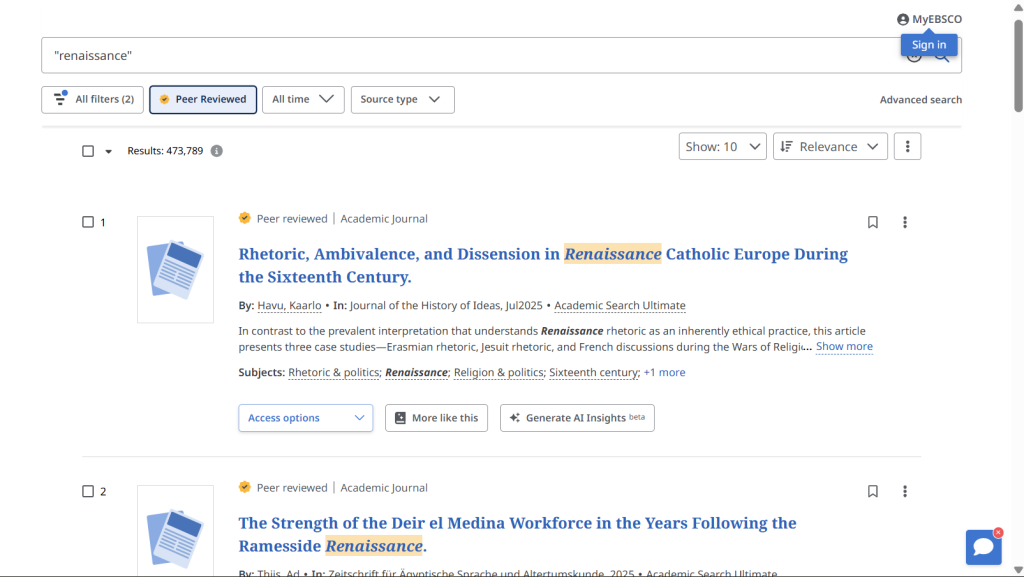
- Find evidence that supports the argument from a credible source. Check your university’s online library for sources like these. I also like to use sweetsearch.com and scholar.google.com.
- Save Time Tip: You don’t have to read the whole article. Just take a look at the abstract, intro, and conclusion. You can also use Ctrl + F or Cmd + F on a Mac in order to search for specific keywords in the article. If you don’t see evidence you’re looking for, don’t look too hard. Just move on to the next promising source.
- Cite the source you’re using based on the format you’re required (i.e. MLA, Chicago, APA).
- Save Time Tip: Don’t do this manually! I use this free website called mybib.com.
- Add your evidence in the form of a direct quote or as a paraphrase. Naturally weave it in after your topic sentence. Include your in-text citation right away so you won’t have to worry about it later. MyBib shows how to format the in-text citations for each of your sources.
- Add your commentary after your evidence. This is to show how the evidence relates to the topic sentence and your thesis.
- Example: [Evidence & In-Text Citation] “This means that people in the Renaissance had greater economic stability.”
- If you need to add another supporting quote, add it and cite the source the same way.
- Sometimes I have trouble with what to say with commentary, so if you’re struggling, consider the 5 Ws: Who, What, When, Where, Why. Do what you can to back up each claim you make with evidence. This will help you reach word count requirements as well.
- To possibly get a higher score, at the end of each section, write a transition sentence that somehow connects the current section to the next section. This helps readers (and professors) see a smooth transition, and it’s less jarring for them to read.
- Example: “Not only did the Renaissance produce economic developments for society, it also led to scientific discoveries.” Notice how it connects my 1st and 2nd main point in my thesis.
- Repeat steps 6-11 for all of your main points.
Lead Readers In and Out From Your Paper
- Write your conclusion. I like to start it with “To conclude…” or “To summarize…” Then restate your thesis statement but change the wording slightly to add variety. Then take 2-3 sentences to give an overall explanation why this topic/your thesis is important. I like to make my final sentence something that somehow shows why this topic is important to current society or the future.
- Example: “The Renaissance left a lasting legacy on Western civilization and provided breakthroughs that we still use in modern society.”
- Write the rest of your introduction. You already have your thesis. The first sentence of your introduction should be the hook, or something that sucks the reader in. This could be a statistic, story, or question.
- If you do use a statistic, make sure you cite the source you got it from and include in text citation for it right away.
- Then transition into some basic background knowledge of the topic. If you’re talking about the Renaissance, give a general overview of the ideals, timeline, and where the Renaissance took place. (Should only be a couple sentences unless otherwise noted by your professor). Then create a sentence that smoothly transitions to your thesis statement.
- Example: “[Background about how in general, past events still affect modern Western society.] Transition Sentence: One of these events is the Renaissance between the 14th and 17th century (in-text citation).
- Thesis: The Renaissance was important to Western civilization because of economic developments, scientific breakthroughs, and philosophical ideals.”
- Notice that the introduction starts broad, then gradually gets more specific until you reach the thesis statement.

Maximize those Logistical Points
- Format your paper. If you haven’t done it yet, copy and paste your whole paper into Google Docs or Microsoft Word. Use the template provided for whatever program you’re using for whatever format you’re using (APA, Chicago, MLA, etc).
- Follow the prompts to fill in the details of the template, and google any questions you have if you’re not sure. Making sure your formatting is right is a great way to get some free points on your paper!
- Make sure you save your paper often, especially in Microsoft Word.
- Add your references. If you’re using a bibliography program like MyBib, there’s an export section. After you click Export, copy and paste the sources into the references section in the document template. Make sure the italicization and indentations are still correct when you paste them!
- Proofread. Read through your paper from the beginning to the end. If there’s a sentence that doesn’t make sense, re-word it. If you need some help, use ChatGPT to help give you some ideas on how to word it, then re-write it.
- Fix spelling errors. If you see a red underlined word, it means that the program is picking up a misspelling. Fix if needed.
- If you see blue underlined words, it means that the program has a suggestion for grammar or conciseness. Fix if needed.
- Spell out contractions. I have a professor who’s very picky about them. Make sure can’t is spelled out to cannot, and so on.
- Review the instructions one more time before submitting your paper. You may find instructions on what format to send in your paper (.docx, .pdf).
Give Your Professor the Honor of Seeing Your Paper
- Submit your paper and be happy (check to make sure it’s the right file). Don’t overthink it. What’s done is done 🙂
If you followed these instructions, you’ve officially submitted a well organized paper as a working student. Congratulations!
If you have other tips that helped you write a paper as a busy non-traditional student, please share it in the comments! I love learning new methods 🙂
3 thoughts on “How to Write Research Papers Step-by-Step (for Busy Students)”
Comments are closed.